Dr. Samhitha Reddy
Consultant Proctologist & Laparoscopic Surgeon
MBBS, MS, FMAS, FISCP, DMAS
- 8 Yrs
- ASCRS Member
Dr. Sai Kishan Sirasala, MS, FIJRConsultant Orthopaedic Surgeon
Dr. Devendar G, BPTManual Therapist
Last reviewed · 6 min read
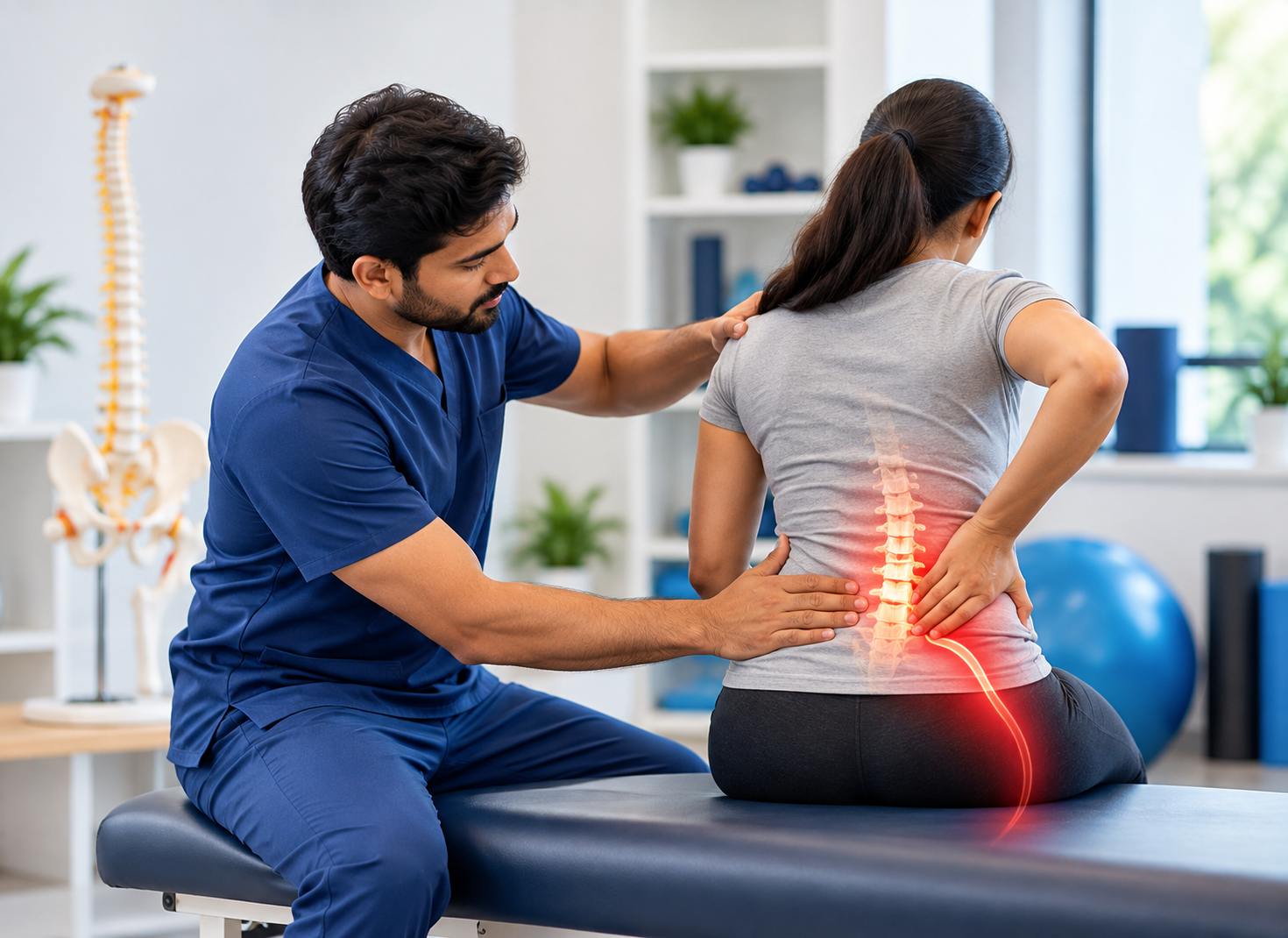
Physiotherapy for sciatica may help improve movement, strength and everyday function when it is appropriate for the underlying cause. Sciatica can cause pain that travels from the lower back or buttock into the leg, sometimes with tingling, numbness or weakness.
Care should begin with an assessment of your symptoms and any warning signs. Depending on the findings, options may include activity guidance, tailored exercises and medical or specialist review. Physiotherapy does not guarantee a cure, and some symptoms require urgent medical attention.
Sciatica describes symptoms associated with irritation or compression of the sciatic nerve or the nerve roots that form it. It is a symptom pattern rather than a diagnosis by itself.
Common symptoms may include:
A disc problem, narrowing around a nerve, inflammation or another spinal condition may be involved. Similar leg symptoms can also arise from muscles, joints or other medical conditions.
General lower-back pain may remain around the spine, waist or buttocks. Sciatica usually includes nerve-related symptoms that extend into the leg.
The distinction matters because treatment should be based on the symptom pattern and physical findings rather than the term “back pain” alone.
Pain intensity does not always show how much structural damage is present. At the same time, persistent numbness, measurable weakness or progressive symptoms should not be dismissed.
A physiotherapy assessment may be useful when:
Physiotherapy is not a single set of stretches. Some people may need graded strengthening, while others may initially need activity modification, movement education or referral for further evaluation.
The physiotherapist may ask where the pain begins, how far it travels and which movements improve or worsen it. The history may also cover numbness, weakness, previous episodes, injuries, scans, work demands and current activity levels.
The physical assessment may include:
An MRI is not routinely needed before physiotherapy. Imaging may be considered following clinical assessment, particularly when a serious underlying problem is suspected or when the findings would change management. Persistent pain alone does not automatically mean a scan is necessary.
Depending on the findings, a rehabilitation plan may involve:
Progress should be reviewed regularly. The plan may need to change if symptoms worsen, new findings develop or everyday function is not improving.
Physiotherapy may improve movement, strength and confidence, but results vary and a cure is not guaranteed. Temporary soreness may occur; report worsening pain, numbness or weakness.
Care may also include doctor-guided medication and manual therapy alongside exercise. Severe or persistent symptoms may need specialist review for injections or surgery after discussing benefits and risks.
Seek urgent medical assessment if back or leg symptoms occur with:
Do not wait for a routine physiotherapy appointment or an online response when these symptoms occur

Consultant Orthopaedic Surgeon
MS Ortho, FIJR, FIASM (UK), FIKS (ITALY), FIRJR
8 Yrs

Manual Therapist
Orthopaedic & Sports Physiotherapist (BPT, NIMS), Certified in Dry Needling
5 Yrs
Lux Hospitals provides physiotherapy assessment and rehabilitation support for movement limitations, back and joint concerns and recovery following injury or surgery. Treatment recommendations are based on an individual clinical assessment.Bring relevant prescriptions, previous scan reports and details of any treatment already tried. During your consultation, discuss what you hope to improve, such as walking comfortably, sitting at work or returning to exercise.
A short consultation with a Lux orthopaedics specialist can tell you what you are dealing with — and what, if anything, needs treating.
Gachibowli, Hyderabad · Seven days a week · Cashless insurance accepted
Published · Last reviewed · Next review due
This article is published for general education. It is not a diagnosis and does not replace an in-person consultation. If you are worried about a symptom, please speak to a qualified doctor.
More from the same section of the library.
Physiotherapy after knee surgery helps patients work toward safer movement, improved knee motion, better muscle strength and a gradual return to everyday activities.
4 min · Dr. Sai Kishan Sirasala & Dr. Devendar GPelvic-floor physiotherapy may help when the muscles at the base of the pelvis are weak, overactive, painful or poorly coordinated.
5 min · Dr. Sai Kishan Sirasala & Dr. Devendar GSend it to us. Questions that come up often get written into this library and reviewed by a Lux consultant.