Dr. Samhitha Reddy
Consultant Proctologist & Laparoscopic Surgeon
MBBS, MS, FMAS, FISCP, DMAS
- 8 Yrs
- ASCRS Member
Dr. Sai Kishan Sirasala, MS, FIJRConsultant Orthopaedic Surgeon
Dr. Devendar G, BPTManual Therapist
Last reviewed · 5 min read
Pelvic-floor physiotherapy may help when the muscles at the base of the pelvis are weak, overactive, painful or poorly coordinated.
Symptoms can include bladder or bowel leakage, difficulty controlling urgency, pelvic heaviness, constipation-related straining or discomfort associated with muscle tension.
Similar symptoms may have different causes. Treatment should begin with an appropriate medical and physiotherapy assessment rather than assuming that everyone needs strengthening exercises.
The pelvic floor is a group of muscles and supporting tissues at the base of the pelvis. These structures help support the bladder, bowel and pelvic organs.
They also contribute to:
A pelvic-floor problem does not always mean the muscles are weak. Some people have difficulty relaxing them, while others have reduced endurance or coordination.
A pelvic-floor assessment may be considered for symptoms such as:
These symptoms can also occur with urinary, gynaecological, colorectal, neurological or other conditions. Physiotherapy may be one part of care rather than the only evaluation required.
Pelvic-floor exercises are often presented as a universal solution. However, repeatedly tightening the muscles may not be suitable for someone whose main problem is excessive tension or difficulty relaxing.
An assessment helps determine whether treatment should focus on:
People may accidentally hold their breath, tighten the buttocks or push downward instead of lifting the pelvic-floor muscles. Supervised instruction can help identify and correct the pattern.
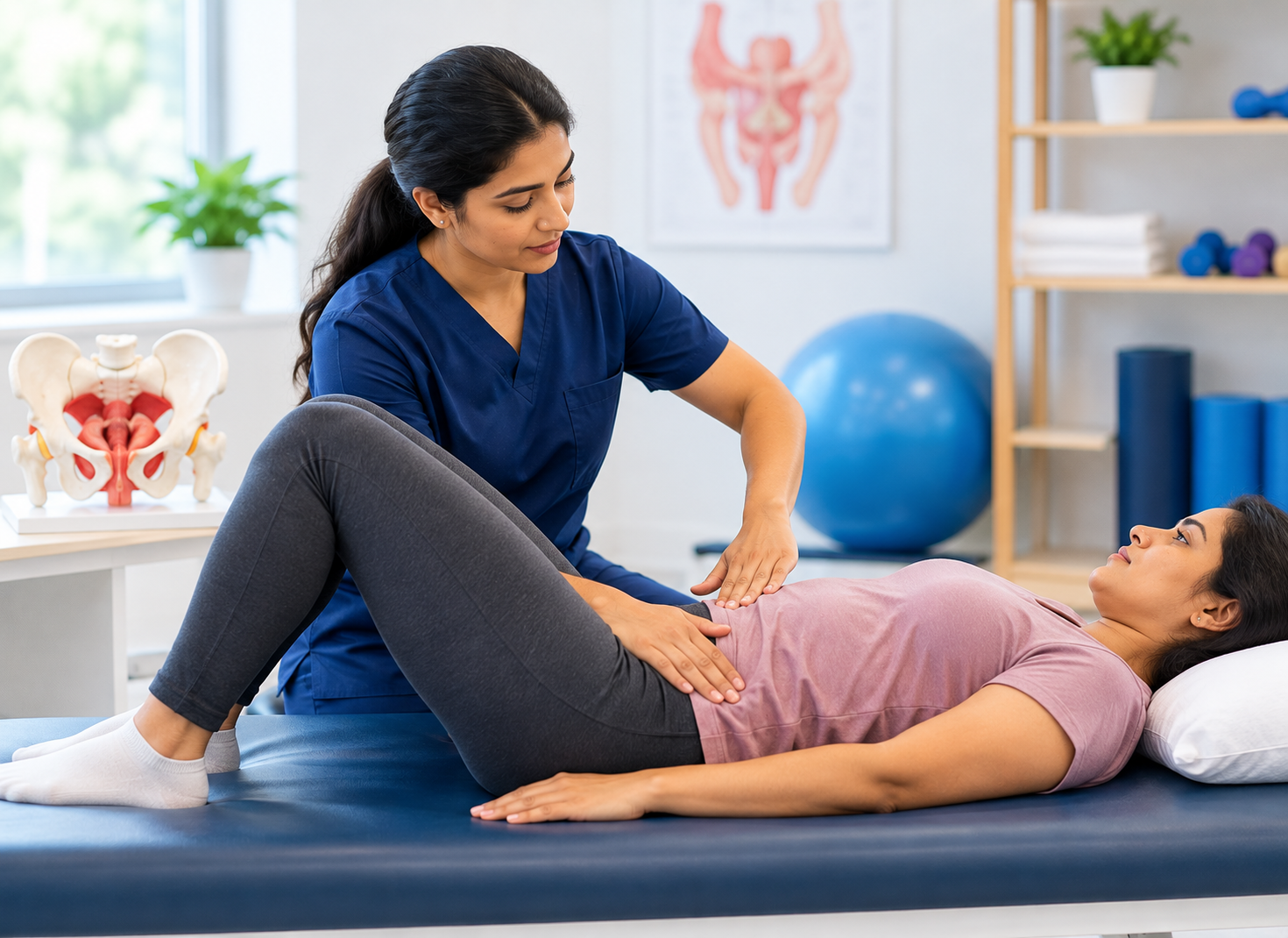
The consultation normally begins with a private discussion about the symptoms, bladder and bowel habits, relevant childbirth or surgery, daily activity and treatment goals.
The physical assessment may include breathing, posture, abdominal and hip function and the ability to contract and relax the pelvic-floor muscles.
If an internal examination may be clinically useful, it should be explained in advance and performed only with informed consent. A patient can decline or stop any part of the assessment.
Treatment depends on the findings and may involve:
Progress is assessed through symptom change, muscle control, confidence and everyday function.
Pregnancy and childbirth can affect pelvic-floor and abdominal function, but recovery differs from person to person.
Leakage, heaviness, discomfort or difficulty returning to exercise may justify assessment. The plan should consider the type of delivery, tissue healing, complications and overall recovery.
Postpartum patients should not feel pressured to return quickly to high-impact exercise. Obstetric or gynaecological review may be needed when symptoms fall outside physiotherapy’s scope.
Medical assessment is important for symptoms such as:

Consultant Orthopaedic Surgeon
MS Ortho, FIJR, FIASM (UK), FIKS (ITALY), FIRJR
8 Yrs

Manual Therapist
Orthopaedic & Sports Physiotherapist (BPT, NIMS), Certified in Dry Needling
5 Yrs
Lux Hospitals provides coordinated care for pelvic-floor concerns through relevant medical and rehabilitation services. The appropriate pathway depends on the symptoms and may involve physiotherapy, gynaecology, urology, colorectal care or another specialty.
A short consultation with a Lux orthopaedics specialist can tell you what you are dealing with — and what, if anything, needs treating.
Gachibowli, Hyderabad · Seven days a week · Cashless insurance accepted
Published · Last reviewed · Next review due
This article is published for general education. It is not a diagnosis and does not replace an in-person consultation. If you are worried about a symptom, please speak to a qualified doctor.
More from the same section of the library.
Physiotherapy after knee surgery helps patients work toward safer movement, improved knee motion, better muscle strength and a gradual return to everyday activities.
4 min · Dr. Sai Kishan Sirasala & Dr. Devendar GPhysiotherapy for sciatica may help improve movement, strength and everyday function when it is appropriate for the underlying cause.
6 min · Dr. Sai Kishan Sirasala & Dr. Devendar GSend it to us. Questions that come up often get written into this library and reviewed by a Lux consultant.