
Dr. Samhitha Reddy
Consultant Proctologist & Laparoscopic Surgeon
MBBS, MS, FMAS, FISCP, DMAS
- 8 Yrs
- ASCRS Member
Dr. Sai Kishan Sirasala, MS, FIJRConsultant Orthopaedic Surgeon
Dr. Devendar G, BPTManual Therapist
Last reviewed · 4 min read
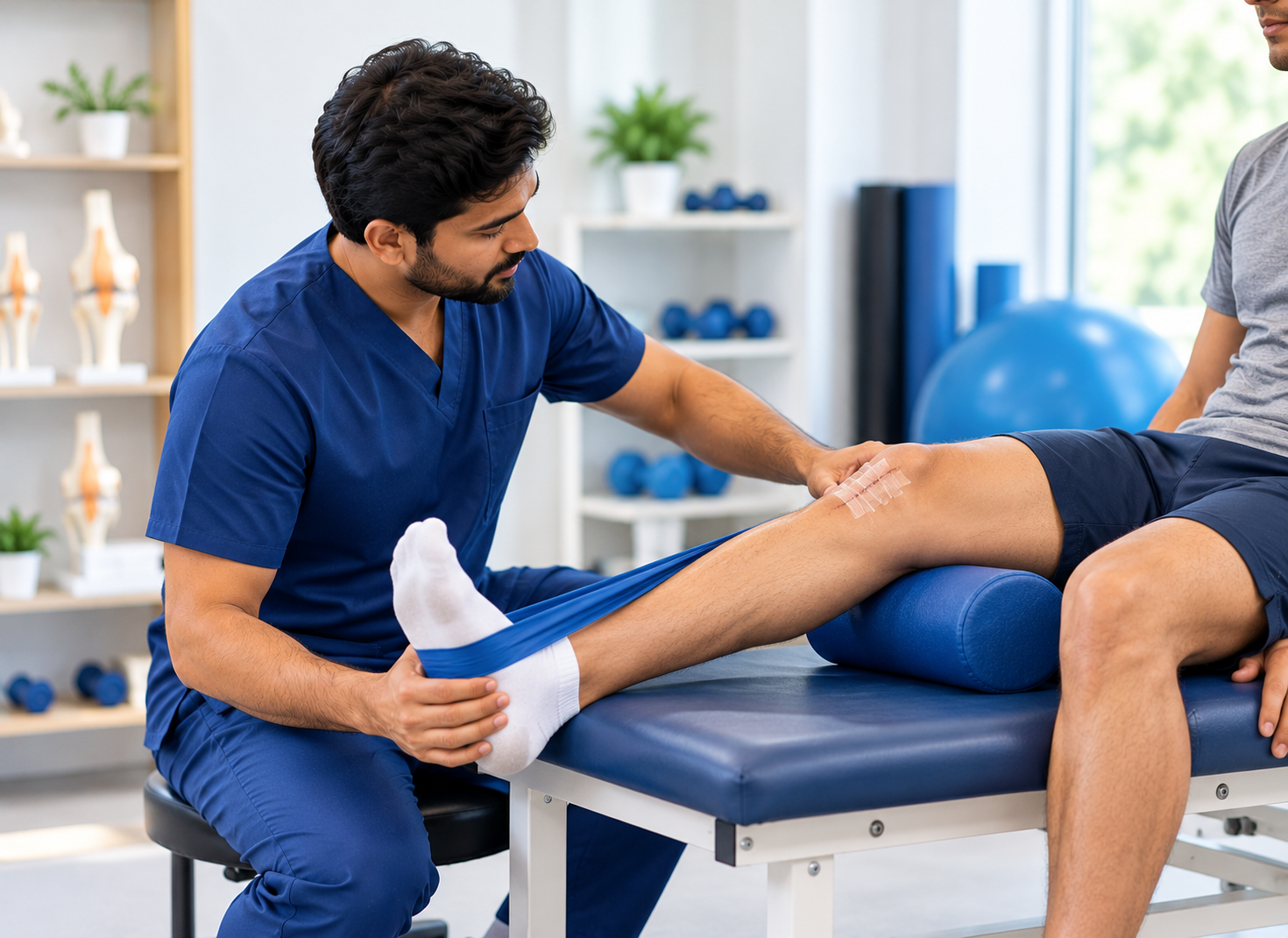
Physiotherapy after knee surgery helps patients work toward safer movement, improved knee motion, better muscle strength and a gradual return to everyday activities.
The rehabilitation programme should follow the surgeon’s instructions and the specific procedure performed. Recovery after knee replacement is not identical to recovery after ACL reconstruction, meniscus repair, fracture fixation or knee arthroscopy.
A structured plan is progressed according to healing, pain and swelling, range of motion, muscle control and the patient’s functional goals.
Surgery addresses a damaged joint, ligament, meniscus or another structural problem, but it does not automatically restore normal movement and strength.
Pain, swelling, reduced activity and uncertainty about using the operated leg can contribute to stiffness and muscle weakness.
Post-operative physiotherapy may support:
Daycare procedures, cashless insurance, and consultations seven days a week at Gachibowli.
Rehabilitation is commonly prescribed after procedures such as:
Allowed weight bearing, brace use, range-of-motion limits and exercise progression can differ. The surgeon’s protocol remains central to the rehabilitation plan.
The physiotherapist reviews the operation and the surgeon’s precautions before planning treatment. The assessment may include:
Physiotherapy does not replace surgical follow-up. Unexpected findings should be communicated to the surgical team.
Early rehabilitation focuses on safe mobility, circulation, swelling management, muscle activation and the range of movement permitted by the surgeon.
Patients may be taught how to move in and out of bed, stand, walk with an aid and perform a small number of prescribed exercises correctly.
More exercise is not automatically better. Excessive activity may increase pain or swelling, while too little movement may contribute to stiffness and weakness. The appropriate balance depends on the operation and the patient’s response.
As healing progresses, rehabilitation may place more emphasis on knee motion, leg strength, balance and walking quality.
Progress may be assessed through:
Exercises are normally progressed in difficulty rather than changed randomly.
Daycare procedures, cashless insurance, and consultations seven days a week at Gachibowli.
Physiotherapy may improve movement, strength and confidence, but recovery varies and full function is not guaranteed. Some discomfort may occur; excessive exercise or ignoring precautions can worsen symptoms or put healing tissues at risk.
Report increasing pain, swelling, numbness or weakness. Care may also include prescribed medication, walking aids, braces and surgical review when needed.
Return-to-activity decisions depend on the procedure, healing, strength, movement control and the physical demands involved. Desk work, prolonged standing, heavy labour and sport place different demands on the knee.
A date alone is not enough to determine readiness. Patients should not restart running, jumping, deep squatting, heavy lifting or sport simply because pain has reduced. Clearance may be required from the surgeon.
Contact the treating team promptly if you develop:
Chest pain or shortness of breath requires emergency medical attention.

Consultant Orthopaedic Surgeon
MS Ortho, FIJR, FIASM (UK), FIKS (ITALY), FIRJR
8 Yrs

Manual Therapist
Orthopaedic & Sports Physiotherapist (BPT, NIMS), Certified in Dry Needling
5 Yrs
Lux Hospitals provides coordinated orthopaedic and physiotherapy support for people recovering from knee procedures. Rehabilitation is planned around the operation, surgeon’s precautions and current mobility.
During your assessment, discuss the activities you want to regain, the exercises permitted at your recovery stage and how progress will be reviewed.
A short consultation with a Lux orthopaedics specialist can tell you what you are dealing with — and what, if anything, needs treating.
Gachibowli, Hyderabad · Seven days a week · Cashless insurance accepted
Published · Last reviewed · Next review due
This article is published for general education. It is not a diagnosis and does not replace an in-person consultation. If you are worried about a symptom, please speak to a qualified doctor.
More from the same section of the library.
Physiotherapy for sciatica may help improve movement, strength and everyday function when it is appropriate for the underlying cause.
6 min · Dr. Sai Kishan Sirasala & Dr. Devendar GPelvic-floor physiotherapy may help when the muscles at the base of the pelvis are weak, overactive, painful or poorly coordinated.
5 min · Dr. Sai Kishan Sirasala & Dr. Devendar GSend it to us. Questions that come up often get written into this library and reviewed by a Lux consultant.