Dr. Samhitha Reddy
Consultant Proctologist & Laparoscopic Surgeon
MBBS, MS, FMAS, FISCP, DMAS
- 8 Yrs
- ASCRS Member
Dr. Samhitha Reddy, MS, FISCPConsultant Proctologist & Laparoscopic Surgeon
Last reviewed · 4 min read
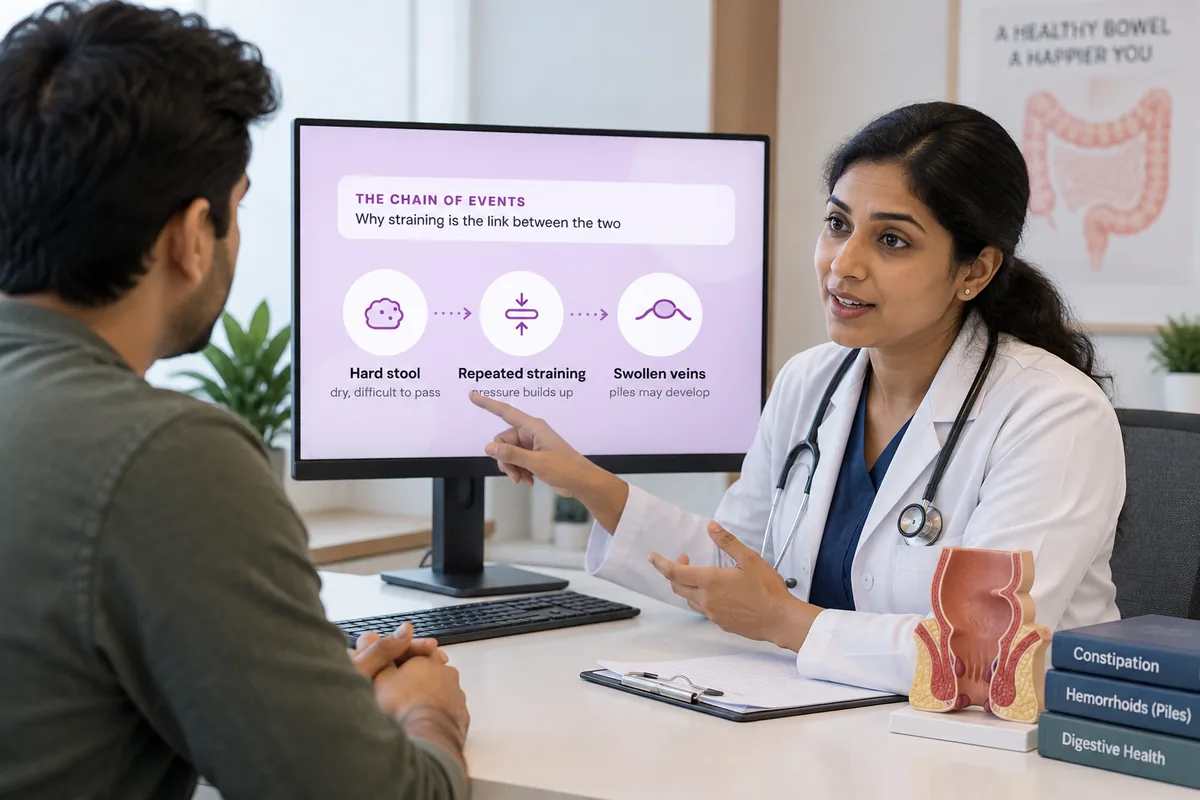
Yes, constipation can contribute to piles (haemorrhoids) in some people. Hard stools and repeated straining during bowel movements can increase pressure around the rectal area, which may contribute to swollen veins and piles.
However, constipation does not mean everyone will develop piles. Other factors such as diet, bowel habits, pregnancy, age, and lifestyle can also influence bowel health.
Piles, also called haemorrhoids, are swollen blood vessels and supporting tissues in the lower rectum or around the anus. They are commonly classified into two types.
These occur inside the rectum and may cause:
These occur under the skin around the anus and may cause:
Symptoms may include:
Similar symptoms can occur with other conditions such as anal fissures or fistulas. Proper evaluation helps identify the actual cause.
Constipation can affect bowel health in several ways.
When stool becomes dry and hard, passing it may require extra effort. Repeated straining can increase pressure on blood vessels around the rectal area, which may contribute to piles.
Sitting for long periods while trying to pass stool can increase pressure around the anal area. Healthy toilet habits can help reduce unnecessary strain.
Ignoring the urge to pass stool may allow more water to be absorbed, making stool harder and more difficult to pass.
No. Many people experience constipation without developing piles. The likelihood depends on factors such as:
Small daily changes may help maintain softer stools and regular bowel movements.
Foods such as these can support healthy bowel function.
Adequate hydration can help maintain normal stool consistency.
Regular walking and physical activity can support normal bowel movement patterns.
Responding to the natural urge to pass stool can help prevent harder stools.
Try not to force bowel movements or spend prolonged time on the toilet.
Daycare procedures, cashless insurance, and consultations seven days a week at Gachibowli.
Consultant Proctologist & Laparoscopic Surgeon
MBBS, MS, FMAS, FISCP, DMAS
Occasional constipation is common. However, medical advice may be helpful if you experience:
Bleeding should not always be assumed to be piles, as other conditions may cause similar symptoms.
A short consultation with a Lux proctology specialist can tell you what you are dealing with — and what, if anything, needs treating.
Gachibowli, Hyderabad · Seven days a week · Cashless insurance accepted
Published · Last reviewed · Next review due March 2027
This article is published for general education. It is not a diagnosis and does not replace an in-person consultation. If you are worried about a symptom, please speak to a qualified doctor.
More from the same section of the library.
Surgery comes in when the tear has not healed after six to eight weeks, or keeps returning despite ointments and diet changes.
7 min · Dr. Samhitha ReddySymptomsBleeding, itching, a lump, or pain while sitting — which combinations point to piles and which point elsewhere.
6 min · Dr. Samhitha ReddyConditions A–ZInternal and external piles, how they are graded, and what each grade usually needs.
9 min · Dr. Samhitha ReddySend it to us. Questions that come up often get written into this library and reviewed by a Lux consultant.